Wound care providers: What to Expect at a First Visit
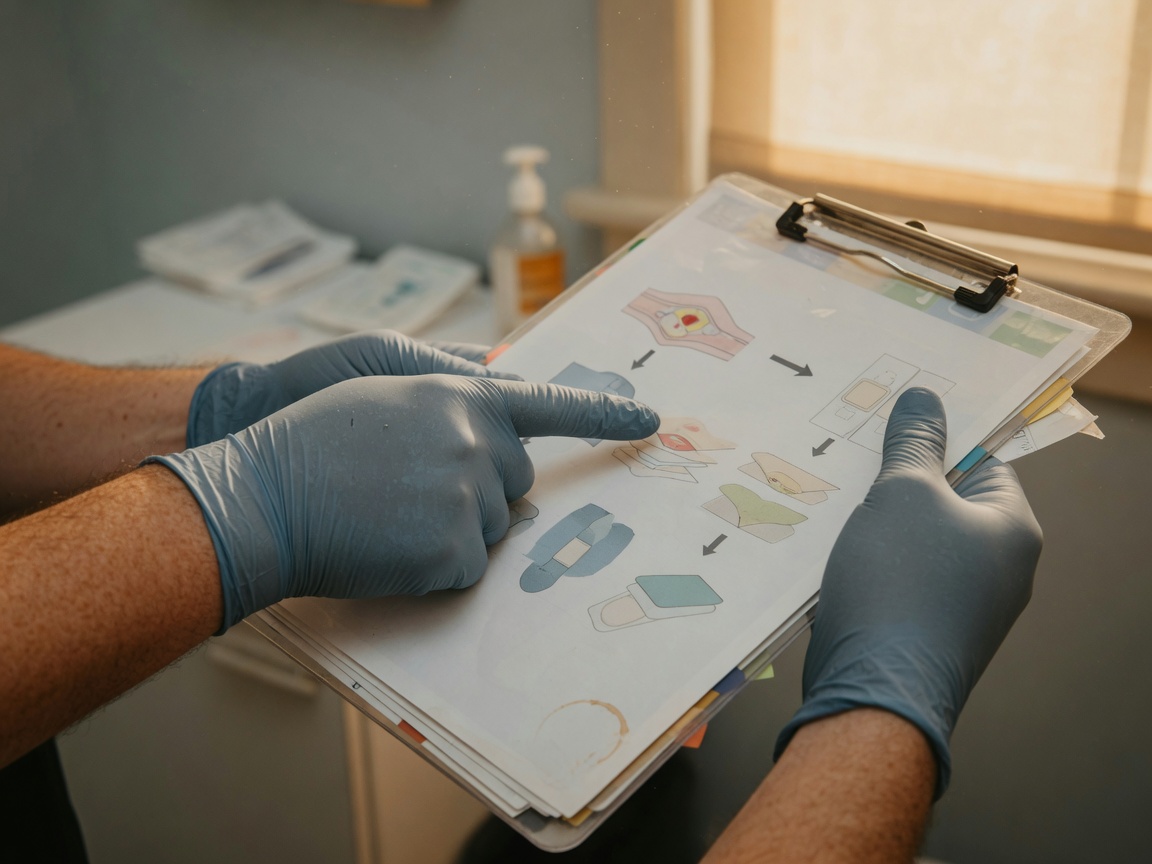
Your wound’s history and assessment
A first visit usually opens with your wound’s history, medical conditions such as diabetes or poor circulation, current medications, and nutrition. The clinician measures and photographs the wound, checks blood flow and sensation around it, and may request infection or circulation tests before selecting a plan. That conversation connects what you have noticed at home with what the clinician examines. Be ready to describe the wound’s course and explain how you have been caring for it. Questions about the measurements, photographs, and proposed tests can clarify what the clinician is assessing before treatment begins.
Treatment and care between appointments
Treatment commonly brings together cleaning, debridement to remove dead tissue, a dressing suited to the wound, offloading or compression when appropriate to its cause, and home care instructions between visits. Some centers provide hyperbaric oxygen therapy or negative-pressure wound therapy for slow-healing wounds; a listing’s category identifies a hospital outpatient center, physician practice, or clinic. Physicians, nurse practitioners, podiatrists, nurses, and physical therapists often deliver wound care together, with patients generally returning regularly until closure. Discuss how the proposed dressing and any offloading or compression fit into daily care, and which team member will explain their use.
Bring your supplies and practical questions
Bring a medication list along with any dressings or devices you already use. Those items give you concrete starting points for discussing your current wound care. Prepare questions about cleaning the wound, applying the recommended dressing, and following any offloading or compression instructions at home. If the plan includes either approach, ask how it applies to your wound’s cause. You can also ask who will handle follow-up assessments and explain changes to the plan. Before leaving, request clarification of any home care instruction you do not understand, including how your existing supplies relate to the proposed treatment.
Listing information and individual clinical advice
Drawn from the NPPES NPI Registry (official CMS API), these records include 787 listings categorized as Wound Care Nurses across 50 states. No visit prices or individual treatment estimates are included in the supplied information. A listing’s category does not supply your wound’s measurements, circulation findings, or treatment plan. For an assessment of your wound, see a licensed therapist or physician. Discuss whether the proposed care involves dressings, procedures, specialized therapy, or follow-up appointments when asking what may appear on a bill. An individual plan follows the clinical history, examination, and any tests the clinician orders.
Find wound care providers near you
Browse 787 listings: start from the directory home, jump to a state on the map, or use the search box on any page.